

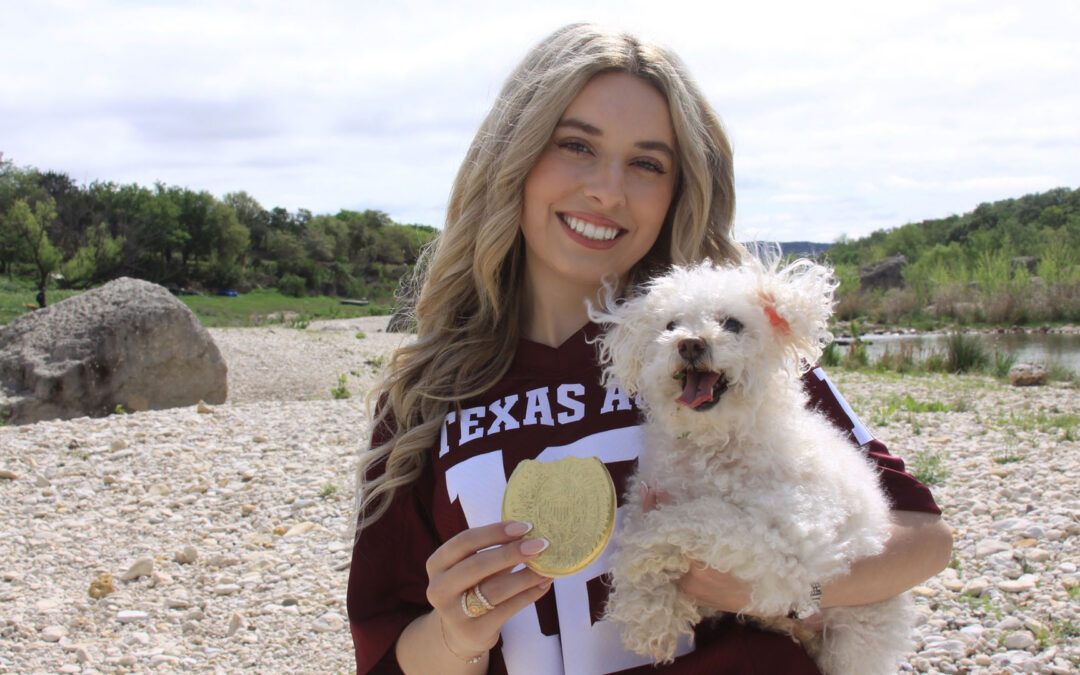
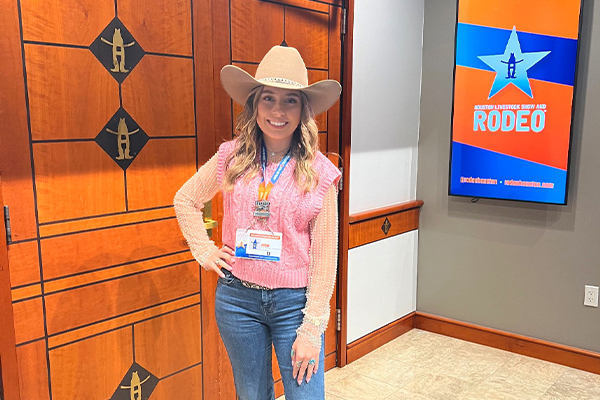
Abigail LeBlanc’s connection to the Houston Livestock Show and Rodeo™ began long before graduate school.
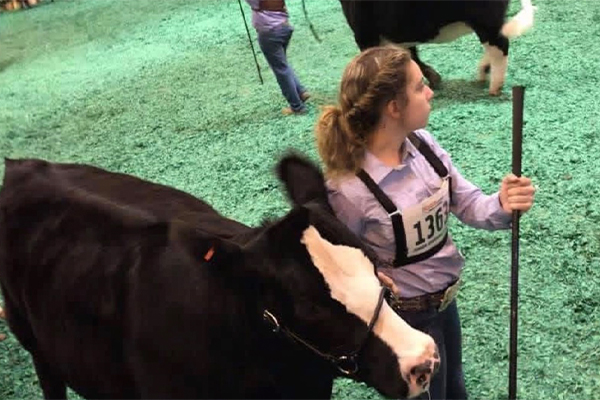
She grew up showing breeding heifers, including Simmental and Charolais and later returned as a college student, completing three internships with the organization’s marketing department.
Now, as a graduate student at Texas A&M University, LeBlanc is beginning another chapter with the Rodeo, this time as a recipient of its Graduate Assistantship Program.
“For me, receiving it was just a full-circle moment,” LeBlanc said. “I felt like the Rodeo was still a part of my life. Getting to know that such a big organization has been through every step of my life, from middle school and high school to college, undergrad and now my masters, is such a surreal feeling.”
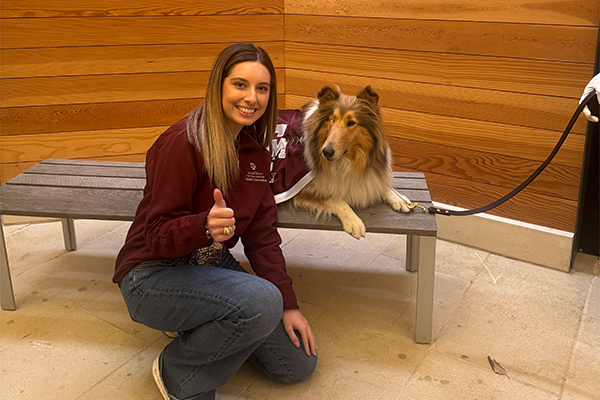
For LeBlanc, the assistantship provides more than financial support. She is gaining classroom experience working directly with undergraduate students, serving as a lab lead and building relationships with faculty members in her department. Leblanc said she hopes to eventually become a professor, adding that the experience is already providing skills and connections that can serve her wherever her career takes her.
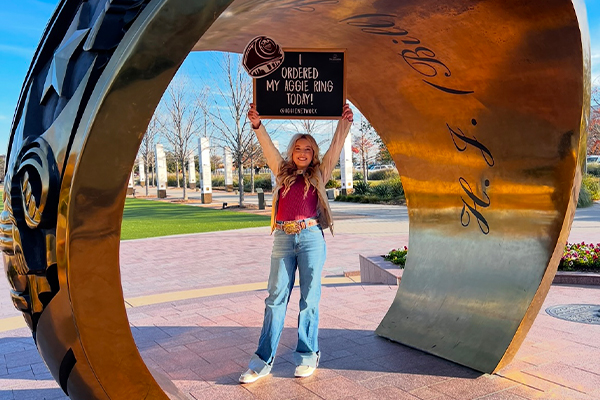
The financial assistance has also helped make graduate school possible. Without the assistantship, LeBlanc said she likely would not be able to afford her graduate coursework and pursue many of the experiences contributing to her education and research.
Her experience is one example of the impact behind the Rodeo’s continued investment in graduate education.
Investing in the Future of Texas Agriculture
In 2026, the Rodeo increased its commitment to the Graduate Assistantship Program to $523,000, more than $40,000 above the previous year. The funding will support 27 students pursuing advanced degrees in agriculture-related fields at 11 Texas universities.
For Houston Livestock Show and Rodeo President and CEO Chris Boleman, the commitment is about giving students opportunities to develop expertise that can ultimately strengthen agriculture and education across Texas.
“When we invest in graduate students, we’re investing in the ideas, research and leadership that will help move agriculture forward,” Boleman said. “These students are developing expertise they can take into classrooms, communities and industries across Texas and we are proud to play a role in helping them get there.”
The Graduate Assistantship Program began in the early 1970s to expand the Rodeo’s involvement with Texas agricultural schools and further its commitment to education and agriculture. Since then, the Rodeo has awarded more than $23.5 million to Texas institutions in support of agriculture professions.
For students like LeBlanc, that investment is already helping shape the work she hopes to carry into the future.
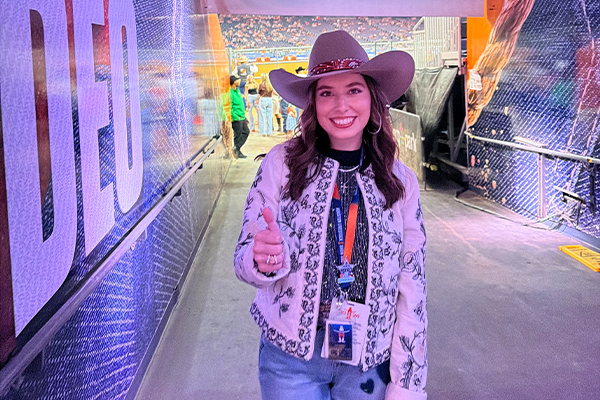
Research Rooted in the Rodeo
LeBlanc’s connection to the Rodeo is influencing not only her education, but also the questions she hopes to answer through her research.
While interning with the Rodeo, she heard a collegiate rodeo athlete describe the challenges of balancing college with the pursuit of a professional rodeo career. The conversation stayed with her.
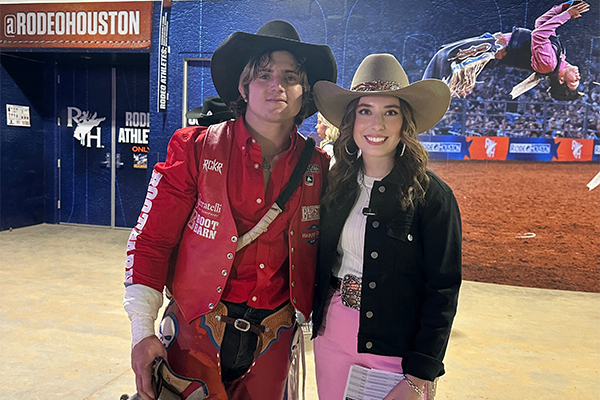
Today, LeBlanc is examining career readiness and personal branding among collegiate rodeo athletes, a group she believes deserves greater attention as its members balance academics, competition and preparation for professional careers.
“They’re competing, they’re training and they’re doing the exact same things, but it’s not played on a field. It’s in a stadium or in an arena,” LeBlanc said. “I hope to start asking these research questions and developing this to get people to realize there is another sport out here and these athletes are competing and training just as hard.”
Her goal is to better understand the resources collegiate rodeo athletes need as they prepare for careers. She hopes her research can bring greater attention to athletes whose paths may look different from those competing in more traditional collegiate sports.

For LeBlanc, the research brings together her education, her career goals and the Western industry that helped shape her.
And in a journey that began in the show ring, continued through three Rodeo internships and now extends into graduate school, the organization that helped inspire her research is also helping give her the opportunity to pursue it.