
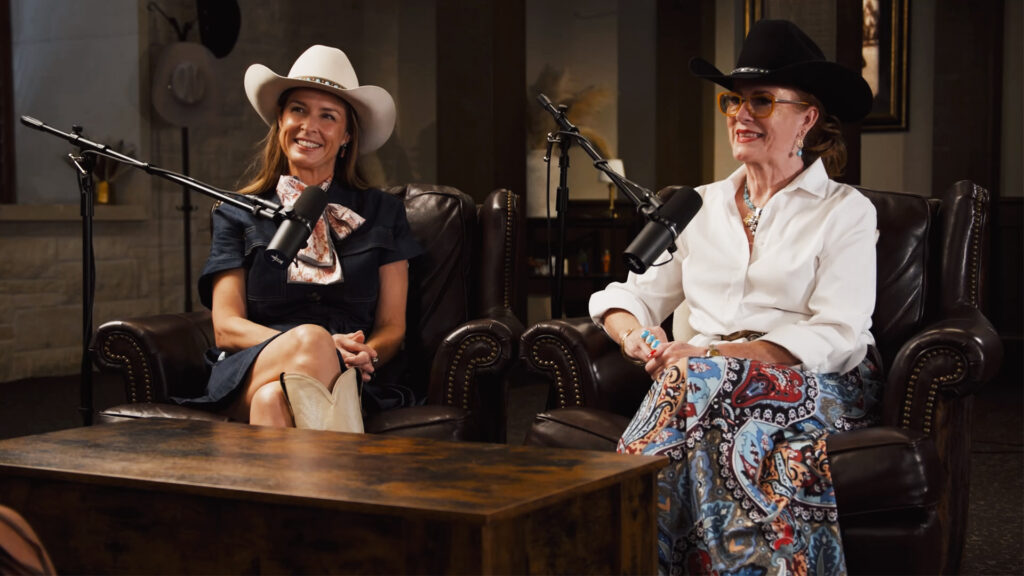


The Winning Pour, Inside Rodeo Uncorked!: Jennifer Lindsay and Monique Studak
Meet the people, passion and purpose behind Rodeo Uncorked! and sample the award-winning wines ahead of 2027.
Play EpisodeFrom expert judging to award-winning vintages, Rodeo Uncorked! is more than a wine competition. Take a closer look at the people, passion and purpose behind this premier event that helps support the Rodeo’s educational mission. We’ll also sample some of the competition’s award-winning wines as we look ahead to celebrating the 2027 champions and the excellence that continues to make Rodeo Uncorked! a premier wine program.
Danielle Grossman 0:01
All right, we are back with Mission Rodeo. We have an exciting podcast today for our listeners. We’re talking all things rodeo uncorked. We have Jennifer Lindsay, who is our director of wine show, and Monique Studak, who is our chairman of winery relations committee. This is an awesome day because we’re talking all things wine, ladies. Thank you for being here.
Monique Studak 0:24
We’re not just talking.
Jennifer Lindsay 0:25
Thanks for having us.
-we brought wine.
Monique Studak 0:28
-we brought wine. Yes.
Danielle Grossman 0:30
Wait, does that mean we have get to drink it later?
Jennifer Lindsay 0:32
In a minute.
Danielle Grossman 0:33
Okay.
Monique Studak 0:33
If we do good.
Danielle Grossman 0:34
If you do good. Yes.
Monique Studak 0:36
If you do good.
Danielle Grossman 0:37
If I do good. Yeah. I’m very excited for this, especially since I get to taste. But thank you for being here. This is such an exciting topic for a lot of folks and a lot of folks who maybe are unfamiliar with our show and the other competitions that we have. Wine is a huge part of Texas and a huge part of our organization. So let’s let’s get to know you guys a little bit first, okay? I have some fun questions. Okay. Okay. Red, white, or sparkling?
Jennifer Lindsay 1:01
Sparkling, it goes with everything.
Danielle Grossman 1:03
It really does.
Monique Studak 1:04
Sparkling goes with everything.
Danielle Grossman 1:06
Okay!
Monique Studak 1:06
It’s not just for breakfast.
Danielle Grossman 1:08
Okay, hold the OJ.
Monique Studak 1:11
Hold the OJ. Hold the OJ.
Jennifer Lindsay 1:12
Don’t ruin it.
Danielle Grossman 1:13
Most underrated wine region?
Jennifer Lindsay 1:15
I would say Spain. Spain had over delivers for the price and the value. I enjoy all the wines from that region.
Monique Studak 1:22
and I would say the Rhone Valley.
Jennifer Lindsay 1:25
Ooh, that’s a good one
Monique Studak 1:25
because the the reds are soft yet can stand up to our barbecue, and the whites are just interesting and different.
Danielle Grossman 1:33
Well, speaking of wine region, we actually have a selected wine region this year. Do y’all want to talk about it briefly for those who don’t know?
Monique Studak 1:41
Oh, absolutely. The wine region this year is northern Italy, so there’s eight regions within that, and it stretches. If you can picture the top part of Italy, the sort of mushroom part, and on the far west we’ve got France coming in and the Alps, and it stretches all the way across to the east side. Is Slovenia? Slovenia. There we go. I can say that. And it’s roughly 350 miles long up in that area. Wow. And what you’ve got is this beautiful basin, fertile basin that is anchored by the Po River. And the diversity of wines is amazing.
Danielle Grossman 2:14
Do we need a professional development trip? That is the question.
Jennifer Lindsay 2:17
I think that’s a really good idea.
Monique Studak 2:19
I do. I think from a professional standpoint, absolutely. Yes!
Danielle Grossman 2:23
We heard it first.
Jennifer Lindsay 2:24
It’s the only way to really understand the region.
Monique Studak 2:26
Is to be there to walk the vineyards.
Danielle Grossman 2:28
Absolutely. So, how do you pick the wine region? What goes into picking that?
Jennifer Lindsay 2:33
You know, we we look at a lot of factors. Originally, we were highlighting whole countries, and we realized that whole countries are so diverse. We a few years ago narrowed our focus to pick some smaller regions. We look for regions that have wines already in the Houston market because there have to be entries to come into the competition in order to create these really fun classes that highlight the regions. Sometimes we look at what’s going on around the world or the regions that have just experienced natural disaster, and they need some promotion and some help from all of our folks that enjoy wine here in the Houston area. And sometimes we look at ones that are in the news, and
Monique Studak 3:10
right. And we have a mission within the International Wine Competition to expand our rodeo families’ knowledge and experience of wine, and also to bring wine lovers into the rodeo, and while doing that, while creating one of the most reputable, best produced wine competitions in the country, which is what our rodeo competition, our international wine competition is.
Danielle Grossman 3:34
Yeah!
Monique Studak 3:34
and so it gives us a spotlight to just bring in more focus on that particular area.
Danielle Grossman 3:39
That’s great. So I want to take a step back first. How did y’all get into wine? How did you start getting into wine? You both have amazing certifications, so you are truly experts in this field, and I’m very excited to learn from you today. But how did you get started?
Monique Studak 3:53
I do have to mention I am a graduate of the University of Texas, being that it’s such a minority in our rodeo family. But I started actually working for a small Texas winery for Messengerhoff out in Bryan College Station, and I was running the retail room. And 35 years later, I worked for during that time period big companies, international companies, and just developed a passion for wine through it. I mean, you travel, you walk the vineyards, you sit at a table and taste wine with people. You can’t help but just love the experience,
Danielle Grossman 4:25
and it brings people together!
Monique Studak 4:26
Like nothing else.
Danielle Grossman 4:27
Oh, seriously! Over a glass of wine, I mean,
Monique Studak 4:29
can almost solve the world’s problems right there.
Danielle Grossman 4:32
I love it. Well, what about you, Jennifer? Obviously, you’ve been at show for a very long time. Talk about your tenure here and and your passion for wine too.
Jennifer Lindsay 4:39
Sure. Well, this is actually my 20th year working for the Houston Livestock Show and Rodeo. My 12th year working with the wine program. I fell in love with wine personally when I was working in a different role here at the rodeo, and then as the wine role opened up, you know, I had the opportunity to take this position, and I. I’ve done a lot of education. I’ve had the amazing opportunity to work with Monique and tons of other people within the wine industry, and continuing to learn more and more. It’s a lot of fun. It’s a it’s it’s fun topic. It’s not hard to make friends while you’re sharing wine.
Danielle Grossman 5:13
Oh, absolutely! And the committees involved in the wine show. I mean, there’s so many amazing experts from all over the country that volunteer here. I mean, it couldn’t happen without them, right?
Monique Studak 5:25
Could not happen without the the volunteers here and the cadre of judges that we bring together to to execute this event, the wine competition.
Danielle Grossman 5:34
The wine competition is amazing, and some folks don’t realize how vast it is and the magnitude and how many different areas of this country and the world are impacted and are also taking part in this competition. So take a step back. Tell us when this started, and I guess how much it’s grown since it started.
Jennifer Lindsay 5:55
Sure. So we are in our 24th year of rodeo and corked. The first year we were on a hope and a dream. We had 300 entries, which was really exciting in the first year for an unknown competition, and now we average somewhere around 3,000 wines a year, which is very exciting. It has grown tremendously. We have over 2,000 volunteers involved in the wine program overall. Directly supporting the wine competition is about 350-400, as well as 130 judges.
Danielle Grossman 6:24
It’s a lot of people that go into it.
Monique Studak 6:27
and this puts us as one of the largest competitions in the country now.
Danielle Grossman 6:30
You know what’s crazy? I meet people. Obviously, we all meet people working at this organization because we meet people from all over the world constantly. And I met people. I was in New York last year for a trip that had to do with work, and I met someone who said that they were in Napa just visiting vineyards, and they saw the saddle. They saw it, and they were like, “That is the Houston Livestock Show and Rodeo,” and that’s all they knew about our organization because they were there at a wine tasting and saw that saddle. And so, it shows you the different groups of people that get exposed to who we are all over the country because of this program.
Monique Studak 7:01
and not just the country, it’s amazing when you travel the world. I’ve seen saddles in Australia, so I mean that’s it’s just phenomenal.
Jennifer Lindsay 7:07
Germany, Italy and France.
Monique Studak 7:08
Yes, I mean it’s it’s amazing to walk into a tasting room and see our saddles internationally.
Jennifer Lindsay 7:12
Being part of the rodeo, we have very unique rewards. So having these custom turpie saddles for our top award winners, and then all of our class champions get custom belt buckles, and so it’s very unusual to see that coming out of a wine competition. So it really stands out in all these winery tasting rooms that have placed within our competition over the last 24 years.
Monique Studak 7:30
Probably the only problem we have is that there’s sometimes a competition at a winery about who gets the belt buckle.
Danielle Grossman 7:35
Oh yes, they don’t display it; they want to wear it.
Monique Studak 7:38
They want to wear it.
Danielle Grossman 7:39
Absolutely, that means they just need to keep entering year after year.
Monique Studak 7:42
Good point.
Danielle Grossman 7:43
To win more belt buckles.
Jennifer Lindsay 7:44
Exactly!
Monique Studak 7:45
We do it for the buckles. I mean, we do it for the kids.
Danielle Grossman 7:47
Absolutely. And so the competition is actually wrapping up right now. Fantastic year, and we can’t share who, but we’re going to be announcing the winners. How do you guys feel? It’s finally happening.
Jennifer Lindsay 7:59
Really excited. You know, it takes months and months to put together this competition and bring all the parts together and get through the judging. And this is the really exciting time when we get to tell people what wines were picked.
Monique Studak 8:09
Exactly. I mean, we started the call to entry started the first of August, so this is a long process to get to today, where tomorrow we get to let everybody know what happens.
Jennifer Lindsay 8:18
And it’s such perfect timing because the holidays are coming up, and so we can share with people, you know, the amazing wines to bring to Thanksgiving and Christmas and New Year’s.
Danielle Grossman 8:26
Oh, it’s awesome! And you know what’s even better?
Monique Studak 8:30
What?
Danielle Grossman 8:31
To taste the wine? Is it time?
Monique Studak 8:34
Oh, I think it’s time.
Danielle Grossman 8:35
Time to taste the wine.
Monique Studak 8:35
It’s time.
Danielle Grossman 8:36
Okay, James, bring the wine, please. James, he has our wine. Thank you, you guys.
Jennifer Lindsay 8:43
Thanks, James!
Danielle Grossman 8:44
I am ready for this education, and I have to admit, I know what I like, right? I think a lot of people listening and watching will say, “I know what Pinot I like with my steak,” or “I know what I eat with my fish,” but that’s it, right? So I think this will be really fun for folks to learn a little bit about it. So let’s get started. I think first I would love Monique for you to dive in with this sparkling right here. Tell us about it, and let’s learn a little bit about how this would be judged in the international wine competition.
Monique Studak 9:11
Absolutely, I need it in my hand.
Danielle Grossman 9:13
I will hand it to you. Here you go for you.
Monique Studak 9:15
Thank you!
Danielle Grossman 9:16
for you, ma’am.
Jennifer Lindsay 9:18
Thank you!
Monique Studak 9:20
And I would compliment you because the first thing you did correctly was to hold it by the stem.
Danielle Grossman 9:23
Oh, good.
Monique Studak 9:24
Yes.
Danielle Grossman 9:24
So I did good.
Monique Studak 9:26
You did great! Because we’re hot-blooded Texans, and so we warm. You know, if you hold it here, I know. So you want to hold it by the stem, and the first thing that we do traditionally is just to check the color.
Danielle Grossman 9:35
Okay.
Monique Studak 9:35
You’re just making sure that there doesn’t look to be anything inconsistent. And when you are judging. You might have eight to 10 or 12 wines in front of you, all of the same varietal. This would fall under our our sparkling categories. This is a Franciacorta, which is a sparkling wine coming out of northern Italy. And people always think prosecco, but this is one of those jewels that we were talking about the diversity of the area.
Danielle Grossman 9:58
Oh, so this is. A prosecco and it’s not a champagne. It’s like an in between.
Monique Studak 10:03
No, it is a sparkling wine that is produced in the traditional method. Which is how champagne is produced, and they use traditional champagne grapes, Chardonnay and Pinot Noir, but it is grown in northern Italy.
Danielle Grossman 10:15
Okay.
Monique Studak 10:16
It can only be called champagne if it comes from champagne.
Danielle Grossman 10:18
Noted.
Monique Studak 10:19
Yes!
Jennifer Lindsay 10:20
Prosecco is made with different grapes in a different style, so this is this is the most champagne-like wine of it.
Monique Studak 10:26
Yes!
Danielle Grossman 10:26
that’s good to know. I think a lot of people say I’m bringing champagne, and they bring prosecco over.
Monique Studak 10:30
No, that’s bubbles. Bubbles are sparkling.
Danielle Grossman 10:33
Yeah, totally.
Monique Studak 10:34
So we’re gonna just look to make sure that the colors are all consistent, and I think we’re good here. And then we would swirl and smell, so swirling, smelling. The first thing you’re smelling for is that it doesn’t smell bad.
Danielle Grossman 10:49
How do you know if it’s like bad is just unappetizing? Well, how do you decipher?
Monique Studak 10:53
Wet cardboard?
Danielle Grossman 10:54
Wet cardboard.
Monique Studak 10:55
Yes.
Danielle Grossman 10:55
Very specific.
Monique Studak 10:56
Yes.
Jennifer Lindsay 10:57
Gym bag.
Monique Studak 10:58
Gym bag.
Danielle Grossman 10:58
Gym bag. Oh, that’s very nice
Monique Studak 10:59
Fritos.
Danielle Grossman 11:01
Fritos. We’re good, I think.
Monique Studak 11:02
Fritos are Fritos are wonderful, but not in your glass. So it’s nice and fresh. So we’ve we’ve looked, we’ve smelt, and then the first taste is always going to clash. So we don’t really think about that. Now, then, if we were in a vineyard, if we were in a vineyard, we’d just spit it on the ground.
Jennifer Lindsay 11:20
We call it first flight fright.
Danielle Grossman 11:22
First flight fright. So you take a sip, you kind of just process, and then we’re going to take another.
Monique Studak 11:27
Yes.
Jennifer Lindsay 11:33
It’s delightful.
Danielle Grossman 11:33
Pretty delightful, I have to say. So we process that.
Monique Studak 11:38
We process that. We’re looking for on a sparkling one like this a little bit of acidity. Can you feel that salivation a little bit along the jaw?
Danielle Grossman 11:47
It’s light, buttery.
Monique Studak 11:48
So we have a little bit of yeastiness going on.
Danielle Grossman 11:52
Right.
Monique Studak 11:52
So we call that brioche, sort of like think fresh French bread.
Danielle Grossman 11:57
Oh yeah, that’s a great.
Monique Studak 11:59
It’s the yeasty notes that come out of bread.
Danielle Grossman 12:02
Should I taste it again?
Monique Studak 12:03
Keep tasting. Oh yeah, definitely.
Jennifer Lindsay 12:05
Getting some lemon and some green apple.
Monique Studak 12:07
Mm-hmm. Much more the citrus.
Danielle Grossman 12:09
I do taste the green apple a little bit.
Monique Studak 12:12
Get that?
Danielle Grossman 12:12
Yeah, I do. It is really nice.
Monique Studak 12:14
Yes. Yes.
Danielle Grossman 12:16
I’ve always been so fascinated by the people that taste wine. They’re like notes of plum and notes of nutmeg, and I’m like, how do you do that? It’s so.
Monique Studak 12:25
As we taste through these other wines, we’ll cover a little bit more of that as well. So, but yeah, Franciacorta and Prosecco. Well, actually, on the sparkling side, there’s also a little Ambrusco that we’re going to find in this northern Italian region.
Jennifer Lindsay 12:38
Just a sparkling red.
Danielle Grossman 12:40
I actually love a sparkling red because it’s so uncommon. I do love it.
Monique Studak 12:44
There you go.
Danielle Grossman 12:44
So people can actually try these wines a variety of ways through the Houston Livestock Show and Rodeo. Can you talk a little bit about that?
Jennifer Lindsay 12:53
So we actually sell collectors’ cases of wine. It’ll be 12 wines that we’ll be picking here very soon. Now that we have competition winners, and has top award winners and other award winning wines from the competition. We have two events that we put on in February, right before the rodeo. We have rodeo and quark roundup and best bites presented by Nan and Company Properties, where we have over 6,200 guests that come. They taste 450 to 500 wines that have qualified through the wine competition. We have about 125 restaurants there, and so you walk in and we give you a glass and a plate, and you go around and have the best night of your life.
Danielle Grossman 13:30
Oh yeah!
Jennifer Lindsay 13:32
which is a great way to try all this.
Danielle Grossman 13:33
It is the . And how do you feel about it moving over to our new agricultural complex in a few years? Space.
Monique Studak 13:39
Ooh, space.
Danielle Grossman 13:40
Are you excited about that? Very much. I’m sure you’re just like daydreaming about what it could be.
Jennifer Lindsay 13:44
It’s the opportunity to reimagine.
Danielle Grossman 13:46
Yeah, absolutely. Yeah, that event is a premiere event in Houston, and everyone wants to go. And so I’m letting people know now if they want tickets, they need to get them early.
Jennifer Lindsay 13:56
They’re on sale now.
Monique Studak 13:57
Tickets are on sale now, and yeah, it’s it’s crazy how quickly
Danielle Grossman 14:01
It goes fast.
Monique Studak 14:02
And then a week after Best Bites, we have our champion wine auction and dinner, where we’ll auction off these wines to raise money for the rodeo’s mission. It’s always a very fun evening and a very successful event. And then, of course, everyone’s favorite attraction at the Houston Livestock Show and Rodeo, we have the Champion Wine Garden presented by Frost.
Danielle Grossman 14:19
Everyone’s Favorite place it is, it is. I mean, I talk to folks who have been coming for years, and their prime core memories are having a glass of wine in the wine garden after maybe the concert or the rodeo, and just sitting under the stars. It’s unlike anything ever experienced at other rodeos. It’s so unique, and I think just people, they they just create so many memories there, and I think that it’s just a great place to have at our event that gives people a little reprieve, right?
Jennifer Lindsay 14:50
It is called our little oasis. We have all the water features and the beautiful statues that you get to drink wine amongst, and we have amazing bands playing on our stage. It’s it’s really good time to bring your friends.
Monique Studak 15:00
It is, and you get to experiment. That’s the fun part too, because we usually pick about 77 wines that are part of the wine garden, and so you get to explore. If you’re not sure if you like Franciacorta versus Prosecco, will you buy one glass? I’ll buy the other, and we’ll we’ll go from there.
Jennifer Lindsay 15:14
We also have a really cool tool within the Rodeo Houston app where you can put in your wine preferences: how much acidity you like? How much fruit you like? And you know you can go through however many factors you want and use a sliding scale, and then it’ll present you which wines on the wine garden list that you would like to drink.
Danielle Grossman 15:30
The RODEOHOUSTON app is incredible, and if folks haven’t downloaded it yet, they absolutely should.
Monique Studak 15:35
Gives you everything you need.
Danielle Grossman 15:36
It really gives you everything you need. And also, we’re now offering sake at the wine garden, which is very cool. I love sake, and it’s something very unique.
Monique Studak 15:45
So it’s actually it is its own class of in the competition, recognizing the importance of that.
Jennifer Lindsay 15:52
Yeah, we do 16 seminars in the wine garden, and we’ve done sake for the last several years. And it’s always the first seminar to sell out. People are so excited to learn more about all the different styles and rice polishes, and it’s a whole new world for folks.
Danielle Grossman 16:04
It really is. There’s a lot to learn about wine in general, but yes, sake is like a whole nother level of things to learn. You know, when you go to a restaurant, they usually offer you what they think is best, and so it’s exciting to know about it and learn about right where we work.
Monique Studak 16:18
Exactly. Well, let’s try another wine.
Danielle Grossman 16:20
Let’s do it. Okay.
Monique Studak 16:22
Thank you, ma’am.
Danielle Grossman 16:23
we’re doing white.
Monique Studak 16:24
Yes.
Jennifer Lindsay 16:25
Thank you.
Monique Studak 16:26
So people often think of northern Italy with big red wines like Barolo’s, and we’re going to have one of those to try. But their white wines, their dry white wines, are outstanding. And so this is a wonderful example of agave, and this is from the Cortese grape, and we’re going to look again. Color, pretty light color. This is a fermented in stainless steel. It does not spend any time in oak.
Danielle Grossman 16:52
Fermented in stainless steel.
Monique Studak 16:53
Fermented in stainless.
Danielle Grossman 16:54
Is there is there a reason it would be in oak over from over stainless steel? Why is that?
Monique Studak 16:59
Stainless steel gives off no flavor or an aroma onto the wine.
Danielle Grossman 17:03
Interesting. Is that a common practice?
Monique Studak 17:06
Yes.
Jennifer Lindsay 17:06
Especially for a fresh, crisp white wine that you’re not looking to impart additional flavors.
Danielle Grossman 17:11
Got it.
Monique Studak 17:11
Yes. And if you think about oak barrels, they may be watertight, but they’re not airtight, so there’s still that little breathing that goes on. In stainless steel, just when you as you cook in stainless steel, nothing else goes on except the the grape. What is the gift of the grape?
Danielle Grossman 17:24
Wow!
Monique Studak 17:24
So the winemaker is just focusing on that.
Danielle Grossman 17:26
Fascinating.
Monique Studak 17:27
So again, color is nice and clean. We’re going to swirl a little, and the aromatics should not smell like Fritos, wet cardboard, or soggy dogs.
Danielle Grossman 17:35
Smells delightful.
Monique Studak 17:38
Very almost floral.
Danielle Grossman 17:39
Floral, yes!
Monique Studak 17:40
So the gifts of the grape. Normally, I start with with flowers and fruit. So what we’re going to pick up when we go to our red wine will be that that barrel influence that the winemaker has brought on. But there’s none of that here. This is just what the grape is giving us.
Danielle Grossman 17:53
Okay, the grape is giving us wonderful scents.
Monique Studak 17:56
Yes!
Jennifer Lindsay 17:56
It’s giving.
Danielle Grossman 17:57
It’s giving. Can I try it now?
Jennifer Lindsay 18:00
Yes.
Monique Studak 18:03
So the first sip is going to kind of clash, so we don’t really think about it.
Danielle Grossman 18:06
Wow.
Monique Studak 18:07
Second sip.
Danielle Grossman 18:08
Okay, second sip.
Monique Studak 18:09
Second sip. And if you want, you can draw in a little air. You know, you hold a little wine in the front of your, behind your teeth, and do a little slurp if you’d like.
Jennifer Lindsay 18:19
The ASMR version of the podcast.
Monique Studak 18:23
Gargling and is not not permitted. Just just slurping.
Danielle Grossman 18:28
Oh wait, okay, like this.
Monique Studak 18:29
Then you did it. No, that’s what I’m saying. Just just little little bit of that, because what you’re doing is you’re aerating the wine just as we did in the glass. You’re pulling air across your palate, and it freshens up the the aromatics again.
Danielle Grossman 18:41
It brings the flavor out a little bit.
Monique Studak 18:42
It does. It does. There’s a whole science. There’s a whole science to this piece, but we don’t have enough time for that.
Danielle Grossman 18:47
Totally. But this is very helpful on things to look for, essentially, when you’re tasting.
Monique Studak 18:52
And so then the question is structurally: How do you feel the wine?
Danielle Grossman 18:56
Okay.
Monique Studak 18:56
All right. Do you feel the acidity? To me, the acidity is not as high as it was on our sparkling.
Danielle Grossman 19:01
Absolutely not. Yeah.
Monique Studak 19:02
It’s a little rounder, so we might call that a little fuller bodied.
Danielle Grossman 19:05
Okay.
Monique Studak 19:06
All right. And then, how does it taste? So, how does it feel? And then, how does it taste? And are we tasting what we smelt? So.
Danielle Grossman 19:16
So putting the two together, essentially, I feel like it smells a little sweeter than it tastes.
Monique Studak 19:21
Okay, and we would call that a dry wine. A dry wine is is a wine in an absence of sweetness.
Danielle Grossman 19:28
Okay.
Monique Studak 19:29
but you can still smell or pick up your fruit components.
Danielle Grossman 19:32
Absolutely,
Monique Studak 19:33
that essence of. So.
Danielle Grossman 19:35
So when you’re judging and you are looking for these things, you obviously have a checklist. What are some of the things on the checklist that you have to go through when you’re judging a particular wine? And is it the same for red and white and sparkling, or is it different? Does it vary?
Monique Studak 19:48
I would say it’s pretty much the same.
Jennifer Lindsay 19:49
A lot of similarities. Bubbles would be a little different with the mousse, but everything else is pretty similar.
Monique Studak 19:54
Yeah.
Jennifer Lindsay 19:55
and reds with tannins.
Monique Studak 19:56
It has to do with you’re looking at the structure and you’re looking at. How it comes together. So, what’s the balance? You know, just like a fabulous outfit should not have should not overwhelm the person and should not just be one thing. It’s it’s a fabulous look.
Danielle Grossman 20:12
Yeah.
Monique Studak 20:12
The balance of the wine.
Danielle Grossman 20:14
Oh, that’s a great way to put
Jennifer Lindsay 20:15
Alcohol standing out of the fruit standing out of the oak standing out. You want it all to work harmoniously together.
Danielle Grossman 20:20
Oh, very cool.
Monique Studak 20:21
Yes.
Danielle Grossman 20:22
Okay.
Monique Studak 20:22
And so, balance, and then we think about the the length of the finish. Sometimes, especially if you’ve got a series of these wines that are all very similar, so how long does it last on your palate?
Danielle Grossman 20:35
Is it supposed to last a while? Like, what is is it supposed to linger, or is it not? What is the?
Monique Studak 20:40
It depends on the grape, and it depends on the purpose.
Danielle Grossman 20:43
There’s no right or wrong.
Monique Studak 20:44
There’s no right or wrong, but it’s just a way to tell a little bit of a difference. Where where are my slight differentiations on this? We look at intensity. How much is actually going on? The hamburger that you had in the seventh grade, right? In lunch line, very bread, meat, packet of ketchup versus a fabulous big hamburger we might have out here at the show that’s layered with pickles and jalapenos and cheese and sauce and you know so there’s this complexity of flavor that’s going on, and again without one thing standing out, it’s just it’s all interesting and as it comes together harmoniously.
Danielle Grossman 21:21
Very cool. Well, thank you for the white. Should we go to red now?
Monique Studak 21:24
Let’s go to the red.
Danielle Grossman 21:24
Let’s go to red.
Monique Studak 21:27
But a little shameless plug for Gavi. This is a fabulous Texas wine in terms of heat because of the just the flavor profile. Yeah, goes with a lot of different foods. Summertime.
Danielle Grossman 21:39
Yeah,
Monique Studak 21:40
which of course here in Texas is going to last us through December. It really is. It’s going to last us through December.
Danielle Grossman 21:45
I’m so hot, guys. Why?
Monique Studak 21:46
Why? Why? Why?
Danielle Grossman 21:48
Speaking of Texas, and we’re talking about wine. Before we dive into tasting this, I would love to taste it. Let’s talk about the correlation of agriculture and our mission and wine itself. I think a lot of people might think to themselves, “Wine, Houston Livestock Show Rodeo.” That doesn’t make sense, but actually, is a direct correlation to our mission. Absolutely, dive into that a little bit.
Monique Studak 22:08
Well, I was just going to say, on the wine side, people often say that wines are made in the vineyard. Great wines are made in the vineyard. It’s not. It’s not in the winery. It’s not the winemaker. It’s that grape grower. Yeah. In fact, we call them wine growers. They’re not necessarily grape growers. They’re wine growers.
Danielle Grossman 22:26
Is that-
Monique Studak 22:27
That’s that’s a common term for people who grow grapes?
Danielle Grossman 22:29
Interesting
Monique Studak 22:30
Wine grapes. Yes. So yeah.
Jennifer Lindsay 22:32
So viticulture is agriculture, and agriculture is one of our pillars of our mission, and so this supports that in that way. The state of Texas specifically is the second largest economic impact in the wine industry in our in our country.
Danielle Grossman 22:45
That’s an amazing fact that a lot of people probably don’t know.
Monique Studak 22:49
Exactly, we have 14,000 acres of grapes planted, and that’s 137,000 jobs related just to grape growing and winemaking here in Texas.
Danielle Grossman 22:58
So we need to keep it alive. Yes, buy and taste wine, basically.
Monique Studak 23:02
Absolutely!
Danielle Grossman 23:03
and come to the wine garden presented by Frost.
Monique Studak 23:05
Yes!
Jennifer Lindsay 23:06
and education is a piece that we love to hit on as well. Another portion of our mission, we love to teach people about our future region, about wines. We do a number of tastings throughout the year. We have our education seminars in the wine garden, and then our program itself raises funds that help support our scholarships and grants that we give out.
Danielle Grossman 23:23
Yes, the auction is an incredible evening, and it’s always exciting to see how much they go for and the excitement in the room. So we’re very excited for that.
Monique Studak 23:31
Yes.
Danielle Grossman 23:32
Can we dive into this red for-
Monique Studak 23:33
Last one. This is our Barolo.
Jennifer Lindsay 23:35
Gosh, it’s magical.
Monique Studak 23:39
It does. It just makes you happy, just right there? I’d say stop, but that would be shortchanging all of us. So Barolo is one of the big classic wines of Northern Italy that people sometimes start and stop here, and-
Danielle Grossman 23:52
That’s what they’re known for.
Monique Studak 23:54
Right, but it’s a great place to start. You don’t necessarily want to stop, but you can’t miss it. You don’t want to miss it. So again, our color looks good. Nice garnet color on this, and you can smell. You get that fruit and flowers. This is where we’re pulling out plum. Yes, roses and roses.
Danielle Grossman 24:11
Oh, it is a little floral, yeah.
Monique Studak 24:12
So roses is definitely a key note.
Jennifer Lindsay 24:14
Plum and floral.
Monique Studak 24:15
Exactly. Yes, but then if you think about it, there’s a little bit of an oaky tone. Can you pick up?
Danielle Grossman 24:21
I do. I do.
Monique Studak 24:22
So now the winemaker has put this wine in the barrel. When you put wine in a barrel, not only do you give it a place to rest and to condense down, but it also draws flavors off of the oak.
Jennifer Lindsay 24:31
Getting some vanilla and some baking spices out of this.
Monique Studak 24:34
Absolutely.
Danielle Grossman 24:34
Baking spices?
Monique Studak 24:36
So that’s the toastiness of the oak. So the oak has been fired and toasted, and then here’s here’s your trivia piece. Vanillin is a component of vanilla, and vanillin is found naturally in oak.
Danielle Grossman 24:48
Vanillin is found in oak.
Monique Studak 24:50
Yes.
Danielle Grossman 24:51
and it’s a component of vanilla?
Monique Studak 24:53
Yes. So when you put the wine-
Danielle Grossman 24:54
Is Vanillin a vanilla bean?
Monique Studak 24:56
It is, but that within the vanilla bean is part of that is. Vanillin.
Danielle Grossman 25:01
Oh, fascinating!
Monique Studak 25:02
So, I mean, there’s a crossover for so many things that are grown naturally, and so when you leave the wine in the wood, it starts to pull the flavors off, and that’s where it comes from.
Danielle Grossman 25:12
Awesome. So, more you know, I guess we need to go in Japanese.
Monique Studak 25:15
The more you know, we can dive deeper into that on our trip.
Danielle Grossman 25:19
Oh, absolutely! Professional development.
Monique Studak 25:21
Yes.
Danielle Grossman 25:21
This is light. It’s smooth. I like a light red, particularly like a Pinot Noir is one of my favorites. This is feels very balanced. Tastes very balanced. I do taste the plum and the oak a little bit.
Monique Studak 25:36
And think braised short ribs.
Danielle Grossman 25:39
Oh, now I’m hungry.
Monique Studak 25:40
Something braised. or grilled. It could be grilled beef. Could be a nice grilled steak. But to me, braised meats with this mushroom. Something there’s an earthiness to it. And the old world wines, and those are wines traditionally from Europe, where the tradition of wine is older. I mean, we’ve been growing grapes in the United States for 250 years. They’ve been growing grapes for 2000 years in Europe. So that’s one of the reasons they name their wines after the regions because that’s just the way they’ve always done it, kind of thing. They they have that history there, and just the the food then will go with the wine.
Danielle Grossman 26:17
Oh man! I know. I want to go to a steakhouse right now. This is fantastic. This is so wonderful learning about how to properly taste a wine. You know, a lot of us drink. We’re bringing a bottle. Let’s just and they drink it, and we drink it because either it’s popular or it’s just what we like. So this is this is great to know and to learn, and maybe hopefully folks who are listening are learning something too.
Monique Studak 26:40
I would never discount though drinking what you like.
Danielle Grossman 26:43
It’s important.
Monique Studak 26:44
It’s very important. But drink, learn, be open-minded, and that’s one of the things we ask our judges: is they have to be very open-minded. They may have a personal preference, but all of that has to be checked at the door when you sit down to judge wines.
Danielle Grossman 26:57
And I do find I have tasted some expensive wines and some, you know, 10, $15 bottles, and some of those lower end bottles are just as good, and some of the higher end bottles I don’t have a preference for. I just think it’s so you can’t decipher whether or not you like something based on the price.
Jennifer Lindsay 27:15
It’s not always about cost.
Danielle Grossman 27:16
Exactly.
Monique Studak 27:17
In fact, one of our categories and big winners is our value winner. So.
Jennifer Lindsay 27:20
So it’s wines under $15 that over deliver.
Danielle Grossman 27:23
Wow, this is awesome! Thank you so much for educating me, Monique, Jennifer. This is fantastic. Again, download our app, RODEOHOUSTON app, and RODEOHOUSTON.com is all the information folks need to learn if they want to go to Roundup and Best Bites, if they want to come to the Champion Wine Garden presented by Fost. This is an amazing program that we have as well, and so we’re excited to see who the winners are.
Jennifer Lindsay 27:45
Tune back in tomorrow.
Danielle Grossman 27:45
All right, thanks for thanks for being here on Mission Rodeo, guys.
Monique Studak 27:48
Absolutely. Cheers.
Danielle Grossman 27:50
Cheers.
 23 min
Red, White and Rodeo: Kimberly Lewis and Sean Lehane
How the Rodeo honors the military with Armed Forces Appreciation Day, presented by Crown Royal, for America’s 250th.
 20 min
A Look Inside the Iconic Calf Scramble: Amanda McGuire and Diesel Jackson
Explore the Calf Scramble Program’s lasting impact, from first steps in ag to the Progress Show.
 22 min
The Art of the RODEOHOUSTON Lineup: Brittany Cooke
How does RODEOHOUSTON book its star-studded lineup? Brittany Cooke shares what goes into the genre calendar reveal.
 20 min
Legends of the Arena, RODEOHOUSTON Hall of Fame: Katelyn Scates
Katelyn Scates unveils our two newest RODEOHOUSTON Hall of Fame inductees for 2027 and what it takes to join the greats.