


Announcing The Farm – Our Future at Highway 288: Chris Boleman and Mayor Whitmire
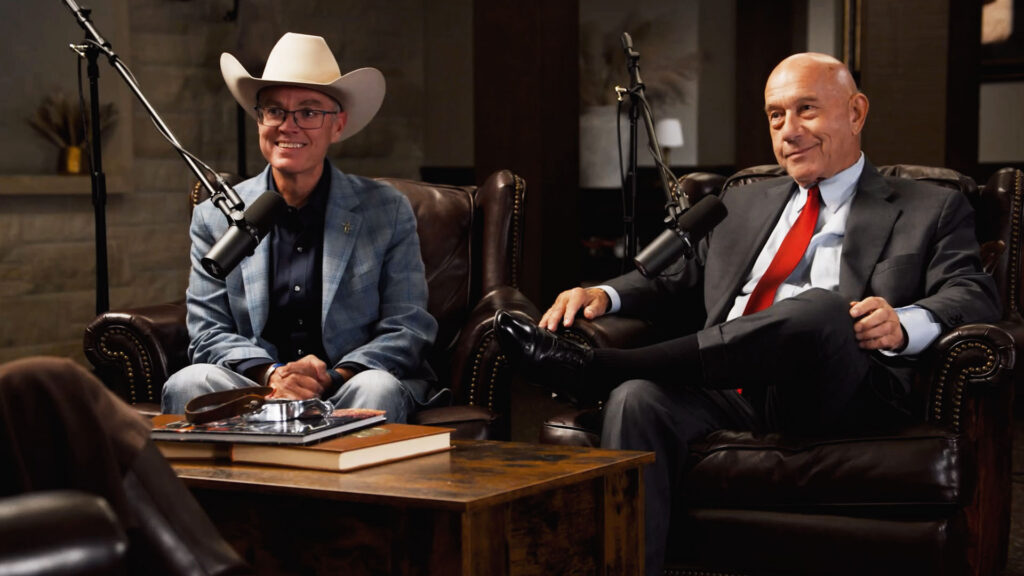
Mayor John Whitmire and CEO Chris Boleman discuss The Farm groundbreaking and its lasting impact on Houston.
Play EpisodeThe Farm represents a transformational investment in the future of the Houston Livestock Show and Rodeo and the city of Houston. In this episode, Mayor John Whitmire and President and CEO Chris Boleman discuss the groundbreaking ceremony, the vision behind the new agricultural complex and the lasting impact it will have on education, agriculture and our community for generations to come.
Danielle Grossman 0:03
All right, welcome back to another episode of Mission Rodeo. I am so excited for this week’s episode. I have two very special guests with me: President CEO of the Houston Livestock Show and Rodeo, Chris Bolman, and then we have the Mayor of the City of Houston, John Whitmire. Thank you so much for being with us. So we have a lot to talk about, but let’s first lighten the mood a little bit, Mr. Mayor. Do you prefer Mr. Mayor? Do you prefer John?
John Whitmire 0:29
John? I’ll answer. I’ll answer to anything.
Danielle Grossman 0:30
Okay, sounds good, John. So, what is your first rodeo memory? Tell us about it. What’s the first thing you remember.
John Whitmire 0:36
Sam Houston Coliseum.
Chris Boleman 0:37
Oh my goodness!
Danielle Grossman 0:38
Wow.
John Whitmire 0:39
It was right where the hobby center is today, not much larger than probably Toyota Arena. Very small, very intimate. This would have been 1955. I was probably about six.
Danielle Grossman 0:52
Wow! You remember
John Whitmire 0:53
Dale Evans, Roy Rogers, who I don’t expect you to know, White Erp, Gene Autry, the imprint that the rodeo made with the personalities and the entertainment is special. Only thing I would even begin to compare it with is to go to the prison rodeo when we had them in Huntsville, and the inmates would have to try to get you know $100 bill off the someone’s horns, and they didn’t have a lot to lose because they locked up for life, and you sit out in a burning sun. But anyway, back back to the Houston livestock rodeo, and then I spent five years after my family divorced when I was seven in rural Texas. The Barn is a great name because I spent five years way out in the country, three miles off a paved road, and then I have a place in Chapel Hill. So the barn, the farm,
Danielle Grossman 1:48
the farm,
John Whitmire 1:50
and a barn. The farm is where I spent five years, very formative years, from the fifth to the ninth grade.
Danielle Grossman 1:59
So ag and livestock are important part of your.
John Whitmire 2:01
So I never had the resource to have a prized animal to raise, but in FFA in the ninth grade, I was in livestock judging. So I would leave Whitney and go to Meridian, Clifton, Valley Mills at you know six in the morning, Judge Steer, or you name it, and it’s it’s part of my culture. Part of my I had small town values and big city opportunities because when we moved here in the ninth grade, I cried. I was one A football. Everybody makes a team.
Danielle Grossman 2:36
You didn’t want to move here,
John Whitmire 2:38
ma’am.
Danielle Grossman 2:38
You didn’t want to move here.
John Whitmire 2:40
Well, see, I left here after the when I was seven, went to Waco, third and fourth grade, then to Whitney, actually between Hillsboro and Whitney. So FFA and farm life, no running water. You know, you bathe with water off the roof in the cistern. You go to town every Sunday with three five-gallon jugs on the back seat, fill it up at a filling station. I would help neighbors with a mule and horse team. The owner goes along. Mostly the command voice commands controlled the team. But as a sixth grader, I was scared to death because I had to make a turn to get back in the row of pulling corn.
Danielle Grossman 3:24
Wow!
John Whitmire 3:25
So I never had the money for a show steer, and that’s reason I can appreciate the rodeo giving less fortunate kids an opportunity.
Danielle Grossman 3:34
It is great. Do you feel like some of the traits and the things you learned when you’re getting up early and doing livestock judging helped you where you be so successful with where you are today.
John Whitmire 3:44
No doubt, that’s where my values came from. And in the sixth grade, I lived 12 miles from Whitney, three miles off the highway between Hills and Whitney. And if your house catches fire in the country, it’s a loss. So in the sixth grade, I was on a visitation with my father going to a Baylor football game, didn’t have cell phones. So Sunday morning, when he’s dropping me off, nothing but the chimney left. It burned completely to the ground, probably electrical fire. They’re not sure, but people come in a rural area from everywhere with blanket sheets, a bucket of sugar, all types. So those small town values
Danielle Grossman 4:22
absolutely
John Whitmire 4:24
shape and molded me. Then in the ninth grade, when they came back, so my brother could go to U of H and live at home, we moved to Houston, got an apartment, and I was unhappy. And then we had located in Pasadena. My mother was a nurse and couldn’t drive. Had to live right. Had to work cross street from the hospital. My father lived in Northwest Houston, Oak Forest. So every weekend I’d spend it there. Then in the summer, after my first ninth grade spring, flunking everything in Pasadena, I got a job at White Cafeteria. Tables in the fall. I didn’t want to go back to Pasadena. I wanted a fresh start at Waltrip High School, and the rest is history. Then I was going to go to Stephen F. Austin, borrow money.
Danielle Grossman 5:11
Yeah.
John Whitmire 5:11
But I got a summer job after high school. I didn’t want to take out loans, and I went to community college two years, and then went out to U of H,
Danielle Grossman 5:20
good for you.
John Whitmire 5:21
In my senior in U of H, I saw a map of the legislature and decided to run.
Danielle Grossman 5:26
And now look where you are today.
John Whitmire 5:28
Yeah.
Danielle Grossman 5:28
Okay, let’s take a step back.
Chris Boleman 5:29
What was the first question?
John Whitmire 5:31
Yeah, I don’t. I’m sorry, but that just shows you why I admire the rodeo. Let’s get back to our subject. I see John Whitmire in a lot of your scholarship winners, yeah, and I I’m jealous because I never got to have a sphere, and probably wasn’t tough enough for the calf scramble.
Chris Boleman 5:49
I wasn’t either. Yeah.
John Whitmire 5:50
So anyway,
Chris Boleman 5:51
so can I say two things? Yeah, two things. One is he has his FFA jacket in your office, right? I do. I think, and and you can still fit in it, right?
John Whitmire 5:58
No.
Chris Boleman 5:59
No. Okay, I got it.
John Whitmire 6:00
and it’s got Whitney on the back, which is the name of my oldest daughter.
Chris Boleman 6:04
Oh, that’s yeah. Oh wow. So and then secondly, I will say that from my youth experience, that nothing prepared me more for life in decision making than livestock judging. I mean, no doubt. My dad coached a team at A and M. I did not know that. Yes, lifestyle judging is help. I mean, the decision making, defending the decisions, good training. I didn’t know that about you till we just sat down. That’s crazy. That’s awesome.
John Whitmire 6:31
Great training. Yes. In FFA, when they’re cutting the teeth off of piglets, yes, so they can nurse. That that was so hard to watch. To be trained to do.
Danielle Grossman 6:40
Look at all these great traits you learned when you were younger. Now let’s take a step back, though. We talked about the farm. You mentioned the farm and how you have all this connection to agriculture, livestock. Let’s talk about the farm, okay? Let’s do it. So we’re here to talk about the groundbreaking that happened last week.
John Whitmire 6:54
Sure.
Danielle Grossman 6:55
Mr. Mayor John, how did it feel to be in that room? Chris, how did it feel to be in that room, we’re finally breaking ground in this agricultural complex. It’s going to impact so many people’s lives-not in our community, but also in the city of Houston. How did it feel to be there?
John Whitmire 7:09
It fires me up. I left there fired up because it’s a demonstration of this city moving in the right direction, and I was asked, or someone mentioned what’s the three words you’re going to ask me that what I think of when I think of Houston is getting stronger every day.
Chris Boleman 7:32
Love it.
Danielle Grossman 7:32
That’s great.
John Whitmire 7:33
And and we’re moving in the right direction. And the farm is another demonstration of a can-do attitude with an organization that is known for being a can-do organization. I deal with problems each and every day. To go witness this site inside the city of Houston, and I’ve ruffled some feathers. I don’t care. I just tell the truth. We’re doing it. Y’all are doing it the right way, and that’s the reason I’m here, and it’s the reason I’m not going anywhere. I want to see the rodeo, which you know we’re still getting great reviews from FIFA, and we’ve had Super Bowls, but the real engine of entertainment, through its volunteers, through its leadership, the economic impact on Houston and our region. I stress our region and state. You know, it’s amazing. I have, I have colleagues in the Senate that don’t want to visit Houston because of traffic or other issues, but they’ll come to the Houston Livestock Show Rodeo because it’s the only show like it is in the whole state of Texas, and state of Texas is a rural operation. It’s obviously growing in our metropolitan areas, but still our roots, as I described my background, and it’s the story of many, many Houstonians. They came from across the state to Houston for their opportunity, and they find they find Houston through a lot of childhood experiences and show show animals.
Danielle Grossman 9:06
It’s amazing. Well, let’s talk about Chris.
John Whitmire 9:08
And it’s safe. Let me go ahead and emphasize.
Danielle Grossman 9:10
Well, of course
John Whitmire 9:10
We have all kind of security challenges in our world today. The rodeo is so proactive in that regards, and it’s because you collaborate with law enforcement so well, and it’s I’m I’m pumped.
Danielle Grossman 9:24
I love that you’re pumped, and we’re proud of that, right?
Chris Boleman 9:26
I’m super fired up too. There’s no question about it. I may not have to say much on this podcast because the mayor is killing it today, man. But just what he said just demonstrates why we do what we do. This is about this is about promoting agriculture in the city, fourth largest city, most diverse, whatever term, how are you going to describe it, and to be able to tell the story of agriculture, I’ve often said the safest countries on the planet are the ones that can feed themselves. We can never take for granted the ability to promote agriculture, and this is our chance to do it. It was great to have you there last week, mr. Mayor. We know how busy you are, but for you to take time to be there was was. Really important to us, so thank you.
Danielle Grossman 10:01
Yeah, thank you for being there. The energy was palpable. You could. It was awesome. It was awesome. It was. I mean, this is such a monumental moment for our community in general because it’s not just the agriculture and livestock, right? It’s the community events that we’re going to be able to have there.
John Whitmire 10:15
Chris mentioned the rain and how we were blessed to get the. It was a good downpour. I almost got up here and say, Well, we’re going to have some fall hay now. That was on my mind. We’re going to get some fall hay, maybe.
Chris Boleman 10:30
We had a little rain, but that’s how you grow the crop.
John Whitmire 10:33
But I mentioned that in the size of the enthusiasm of crowd was not not hindered by the rain at all.
Chris Boleman 10:40
It was not. That was awesome.
Danielle Grossman 10:42
I know it was a sign. I was waiting for your one-liner. It was perfect.
Chris Boleman 10:42
I know. I nailed it.
Danielle Grossman 10:44
I know you nailed it. Amazing.
John Whitmire 10:47
It was well handled. Well handled.
Danielle Grossman 10:49
Let’s talk a little bit about what this facility is going to do for our community when it comes to jobs. You know the economic impact. We already have a great economic impact, right? It’s comparable to a Super Bowl every single year. But this facility, this complex, the farm is going to do so much more. What does that mean to you, and what you foresee for the future? You’ve been in this role now two years, right? So, you know, from a jobs perspective, not paying, not costing our taxpayers, taxpayer dollars. I mean, how does that feel for you?
John Whitmire 11:19
It could be a model. A model. We’re growing by leaps and bounds, and you know, we had 700,000 people travel to Houston today to work and attend events. And I understand they go to the suburbs. It’s more affordable. They have some great schools districts, but my challenge is to improve the quality of life and the opportunity inside the city of Houston for the people that would like to live closer to work. The Med Center, our universities, I can go on and on what attracts the Houston people to Houston to work. We want them to live there, and so to see the rodeo, understand the commitment historically to Houston, where they got their start, right downtown, to still have the vision of staying inside the city of Houston, and then of course most levels of government are strained financially. To see that they’re willing, through their donors and their leadership, to not depend on the public taxpayer dollars, which you know I’ve been a public servant, elected official my whole adult life, so I understand the model of going to government for public assistance, whether individual families are really successful organizations with tax abatement. I can go through the whole mechanism. Here, someone that is well connected is any institution, probably in America, but certainly in Houston, to say no, we’re not going to look to government. We’re going to solve our problems ourselves. Hopefully, we’ll continue to partner in collaboration, but we’re going to break ground on our own. That is a strong message, and I deal with major manufacturers. You know, major drug. I was at an Apple computer ribbon cutting the other day. Most major successful institutions still look to government for tax breaks or actual handouts. So you know, as a public servant, I’m responsible to taxpayers. We need to make our taxpayer dollars go as far as they can. So now to see someone who has so much political influence and so much economic firepower that they could have asked and dang near dug in on some public assistance, and I’m not going to say it’s not going to come forward at a later date, but not today when we’re so challenged. Yeah, means a lot because there are people watching, and you know we’re always trying to improve venues and business opportunities. Or anyway, you absolutely. I hope I hope you understand. It’s just it helps me do my job of selling Houston. It’s somewhere. where you can you can make it.
Danielle Grossman 14:24
Yeah, absolutely. And I mean, reiterate, Chris. Like, what does this mean to the Houston Livestock Show and Rodeo to be able to do this for our community, for our people, for our our students?
Chris Boleman 14:32
Yeah, I think what a lot, and just reading all the comments since the groundbreaking and seeing really a lot of enthusiasm and energy across the community, across several most social platforms, but I still don’t know that everyone is embracing the year-round activation that’s really in play here. It’s one thing for March, and as I said in several interviews, we know we own March, so to speak, in Houston. But be able to do and provide activities and events, the. Their 11 months. I think people. I think we’re still scratching the surface of what those opportunities could be, which leads to jobs, which leads to community impact. And so I think as we move forward, a lot of folks are focusing what happens in March. We’ve heard a lot of questions, as you know, about getting people back and forth and how this works operationally. And certainly we’re knee deep in addressing all that, but it’s those those other 11 months where we can do what we want out there in an effort to support our mission. That I think, man, I can’t I can’t wait to start talking about more of that. I know we’re not ready today, but we want people to understand the the opportunities that are ahead in a million square feet square feet of space, a 5000 seat arena. It’s it’s pretty cool to think about what’s what’s what are the possibilities out there.
John Whitmire 15:41
and I probably didn’t appreciate that enough either. The educational opportunities, the entertainment, concerts, you name it. It’s really going to fit in in that in that quarter of our region is just booming, as all our communities are, but the opportunity for diversity, the opportunity to be inclusive, is is just is really exciting.
Danielle Grossman 16:10
And bringing you know ag education to some of these families who may not have it the other 11 months of the year, right? Or people who are passing through, they can stop by the farm, they can you know get a tour, or they can learn something about our history. I mean, it’s a really cool. It’s something that we can offer our community that hasn’t been offered before, and I think that everyone’s going to benefit from it. And I think it just shows the excitement from the community, from your office in general, of what could be there. Right? It’s not just entertainment, but it’s so much more than.
Speaker 1 16:37
Sit here and think. What’s so popular at your exhibit currently? The petting. What do we call it? Petting zoo. Whatever
Chris Boleman 16:43
we’ve got. We we got ag venture presented by Oxy.
John Whitmire 16:46
I’m just thinking about to go. If you if you could year round allow families to bring their city kids to to interact with farm animals, what an experience! Or I’m sitting here thinking now of some kind of pond, either indoor pond. Right. You know how many city kids never catch a fish?
Danielle Grossman 17:03
Yeah. it’s true.
Chris Boleman 17:04
it’s crazy. Yeah
John Whitmire 17:05
You got the capacity out there to give them darn near every farm experience.
Chris Boleman 17:10
Yeah, and and that’s been the point. That the list is longer than what you can execute when you think creatively enough, and so those are going to grow.
John Whitmire 17:18
Think what we’re saying. Get ready. It’s going to take off and grow.
Danielle Grossman 17:21
Oh, it will. It’s going to take off. I mean, just like Chris said, we’re just scratching the surface of planning and programming. We have two years to do it, so we have some time.
Chris Boleman 17:29
and so many partners too. I should. I want to add that, Danielle. So many people have reached out. We’ve been proactive too. But we’ve also heard from school districts and other youth or serving organizations and all types of other ag program areas of where we can partner, so they see it.
Danielle Grossman 17:44
Yeah, the future is endless.
John Whitmire 17:45
It could involve nutrition.
Danielle Grossman 17:47
Absolutely.
John Whitmire 17:47
I mean, you know, kids never seen what an ear of corn. Where’s it come from? Right.
Danielle Grossman 17:51
It’s important for them.
John Whitmire 17:52
could do some planting out there.
Danielle Grossman 17:54
Yeah, you don’t just go to H E B and pick up your steak. You know, let’s talk about how it gets to the growth. Get to
Chris Boleman 17:59
Get to the plate. Yep.
John Whitmire 18:00
Yeah. It’s a long list opportunity.
Danielle Grossman 18:01
It’s endless. Okay, so what was your reaction when you heard the name of the complex, the farm?
John Whitmire 18:06
Loved it. Loved it.
Danielle Grossman 18:07
You loved it.
John Whitmire 18:08
I told you my farm. I kind of told you. I get so excited. I started calling it the barn.
Danielle Grossman 18:15
I know
Chris Boleman 18:17
because that’s where you grew up going. Yeah, yeah.
Danielle Grossman 18:20
There’s a barn on the farm.
John Whitmire 18:21
Hey, it resembled. our oat in the day. Kind of resembled being in a entertain in a in a barn setting. It was morning. Yeah, it was. Had some porticans out there. I mean, you know, we were in the country. We were in the country.
Chris Boleman 18:34
Right now, it’s the country. Yes, for sure.
John Whitmire 18:36
The farm is actually right here in the fourth largest city. Soon to be the third largest. As diverse as it is, to be inclusive, and you know, we got to explain to some of our friends what a farm is all about.
Chris Boleman 18:49
That’s right!
Danielle Grossman 18:49
Absolutely.
Speaker 2 18:50
See it and live in colors.
Danielle Grossman 18:52
So, Chris, I mean, the farm. How are you feeling about that? I
Chris Boleman 18:55
love it. You know, as soon as it. So, obviously, you know, the process we went through, and that one just really resonated, particularly when furthering our agriculture and ranching mission. It’s it’s so perfect with those four words to tie it all together, right? For what each letter of the farm, and because it is it is without question really what we’re doing. It’s it’s furthering that commitment as a part of our mission. And so I was just talking to a group earlier today. Look, our original mission was promoting agriculture, and quite frankly, it was so people could show their Brahmin cattle because that’s what people raise in this area. Here we are, 95 years later, still promoting agriculture in in a time that’s 95 years later, and so it’s just super cool to see it. It just it was meant to be.
Danielle Grossman 19:37
It really was,
John Whitmire 19:38
and it’s so user friendly. See, I was-I heard you describe the process, and I’m thinking, “Oh, it’s going. I was ready for some corporation name or something, some name rights or something that may come later. I don’t know. But the farm was just so welcoming, and and a lot of it had to do with my personal experiences.
Everybody wanted to go to the grandma’s farm. In even Houston, I mean, to this day, young Houstonians have to travel so far to be on a farm.
Danielle Grossman 20:06
Not anymore. Not anymore.
Chris Boleman 20:09
Well, it’s funny because I I used to use this in lectures of how many of you grew up on a farm. Very few people. How many of you went to a farm at your grandparents? And a lot of the room would raise their hand. Lately, when I do that at different universities or high schools, you don’t see as many hands grow up, go up because we’re just further and further removed, and so this this puts us right back in it with this facility. So we’re
Danielle Grossman 20:31
all very excited about it.
John Whitmire 20:32
You want to see a barn? You got to go to UT football game. If you want to see a what what does the Raiders call their horse? Would be just a red Raider, a horse. Yes, you got to go, or you can go to A&M. We identify with our animals. You know, we are even in an urban setting. We love our animals.
Chris Boleman 20:51
There’s a connection there. There’s animal connection.
John Whitmire 20:53
Animal welfare is a huge issue. So you see, you can facilitate that message, animal welfare, out at the farm.
Danielle Grossman 21:00
Yeah. So let’s talk about rodeo for a second. We’re entering our 95th anniversary.
John Whitmire 21:05
Yeah.
Danielle Grossman 21:05
Unbelievable. So this is like an exciting time. 95, leading up to our centennial, which is going to be here before we know it.
John Whitmire 21:12
Yeah.
Danielle Grossman 21:12
Right. 32. That’s crazy. It’s going to be 100 years of a rodeo.
John Whitmire 21:16
Yeah.
Danielle Grossman 21:17
What is your favorite part of the Houston Livestock Show Rodeo,
John Whitmire 21:20
I just hope to be here.
Danielle Grossman 21:20
Mr. Mayor? What is your favorite part of the rodeo, and what are you looking forward to this year?
John Whitmire 21:24
Well, the parade itself is pretty special because it includes so many families and visitors. The carnival, y’all been so successful. I like the hall. I love to go exhibit, which is not you know rodeo per se, but it’s it’s the experience. I’ve already mentioned the carnival, the parade. Now let’s get to the rodeo. The rougher, the better. The bull riding and horseback is pretty pretty. The the the barrels, you know, the skill the skill there, and it all we all know it starts. You got to have the right horse, calf rope it. So just the rodeo experience, the the gathering, entertainment. I mean, I could spend the whole afternoon. There’s a reason you’re successful,
Danielle Grossman 22:08
exactly.
John Whitmire 22:09
and it’s the experience. So so I shouldn’t even try to name the event that I appreciate the most. It’s the experience.
Danielle Grossman 22:16
When you talk to even
John Whitmire 22:17
getting in and out.
Danielle Grossman 22:19
When you talk to someone who’s not from here? Like you were talking about the folks, you know, in the Senate or whatever. What do you, how do you describe our event? How do you describe our organization to them? I’m curious what you tell them to describe the Houston Livestock Show.
John Whitmire 22:33
Depending who you’re talking to, if you’re talking to some some somebody from Whitney or Hillsboro, come on down. There’s nothing like it. If you’re talking to an immigrant, come on down. There’s nothing like it in Nigeria or anywhere in the world. So, so all you got to do is just come, take my word for it.
Danielle Grossman 22:52
Exactly.
John Whitmire 22:52
And people do take my word. Come. It’s an experience like you’ve never had before.
Danielle Grossman 22:57
Yeah.
John Whitmire 22:57
It’s not like a football game. It’s not like soccer; it’s it’s it’s a challenge each and every event. But the entertainment component is, and it’s affordable. And if you get out to the carnival, you’re on your own. You know, spend what your credit card will allow.
Danielle Grossman 23:13
You just have fun. It doesn’t matter when you’re out there. You just you know make memories.
John Whitmire 23:18
The whole experience. The whole experience.
Danielle Grossman 23:19
I love it, Chris. If you were talking to Houstonians today, maybe it’s not the Houstonian who is directly involved with agriculture and livestock. What would you say to them about the farm and the future of the rodeo? And what do you hope they’re going to get out of this?
Chris Boleman 23:33
Well, it’s like anything else. I mean, we always say we’re competing for people’s time, even even during showtime. You can either come to the show, or you can go do something else, right? And so I don’t see the farm as being any different. We want to create an experience where families want to come, and again, we know what that looks like in March, or we’re pretty clear there. But it’s those the other time period where we have to create experiences, hands-on learning, fun entertainment experiences for them that’s still critical and connects to the mission, and so to your point, it’s about hands-on learning. It’s about learning by doing, and those are the experiences we need to provide so the families can come and participate and understand how we do what we do, particularly when it comes to our food and fiber industry, which I think will be a big piece of it.
Danielle Grossman 24:17
Absolutely, and so now we know we’re called the farm. People can learn more about the farm on our website, rodeohouston.com. We have a whole landing page, so folks can interact, learn more about off-season opportunities. They can inquire about events happening, things like that. It’ll be updated as we move forward with the process. So that’s exciting. People can access that. But overall, we’re still learning. We’re still going. We are. We are building, as we saw at the groundbreaking. It’s still very much a level playing field out there. So,
John Whitmire 24:46
could I get the dates? I’d like to. I’d like to reduce that to my memory. We had the groundbreaking.
Chris Boleman 24:52
Yes, sir.
John Whitmire 24:52
So I assume we’re working today.
Chris Boleman 24:54
Yes, that we’re working today.
John Whitmire 24:57
When when would we have like a grand opening?
Chris Boleman 25:00
So our plan is that it would open for the March 2029 show. That’s, I mean, that’s our that’s what we’re shooting for. So, so what I like to say is we really have two more shows in our current model: 2027, 2028, 2029. We have a new experience, a second campus, and so the goal is that’s our is to open it up in March 2029. There will be some events before then, but the actual grand opening would be for Showtime March 2029.
Danielle Grossman 25:27
Be here before we know it.
John Whitmire 25:28
That’s exciting, Lord! And if voters willing, I’ll be there as mayor to cut the ribbon.
Chris Boleman 25:34
I love it.
Danielle Grossman 25:34
We’re excited for it. The farm is coming. the The city’s ready. The people are ready. Thank you so much for being part of our story, being such a supporter of the Houston Livestock Show and Rodeo, mr. Mayor, we appreciate it, and of course, President CEO.
Chris Boleman 25:46
Yeah, man, thank you. Yeah, no, thank you. And on behalf of the Houston Livestock Show and Rodeo, 36,000 volunteers, and what we do for this community, we’re super thankful for your leadership. We know that it’s a job that maybe every day it’s not you get criticized. There may be things going on, but we know you’re doing all you can to make this the best community in the country, and we’re thankful for you.
John Whitmire 26:06
Thank you, Chris, and Livestock Show and Rodeo. It’s a pleasure to to work with can-do people that share that philosophy. Let’s just get it done.
Danielle Grossman 26:14
Absolutely,
Chris Boleman 26:15
get her done.
Danielle Grossman 26:16
Yes, thank you for being part of Mission Rodeo. Until next time, guys. Take care.
Chris Boleman 26:19
Thank you.
 20 min
365 Days of Possibility: Chris Boleman and Wesley Sinor
The Rodeo lasts weeks, but its mission never stops. See how The Farm brings agriculture to life 365 days a year.
 20 min
From Vision to Reality: Peter McStravick and Parker Johnson
Peter McStravick and Parker Johnson share the vision behind The Farm, a historic investment in the Rodeo's future.
 7 min
7 min

The Art of Becoming | Joshua Washington’s Road to Rodeo
Joshua Washington's mom believed in his talent. Now he's the 2026 School Art Grand Champion. Watch his journey.
 19 min
Behind the Gates at the Farm: Kyle Olsen and Karl Hengst
Kyle Olsen and Karl Hengst discuss how The Farm will benefit exhibitors, volunteers and guests for generations.